The Carder · Governors Island
The History of Governors Island, NYC
Its history doubles as a guest list: George Washington’s generals, Wilbur Wright, Ronald Reagan, Mikhail Gorbachev, Prince Harry, Wu-Tang Clan and the first Governors Ball all passed through here.
Governors Island at a glance
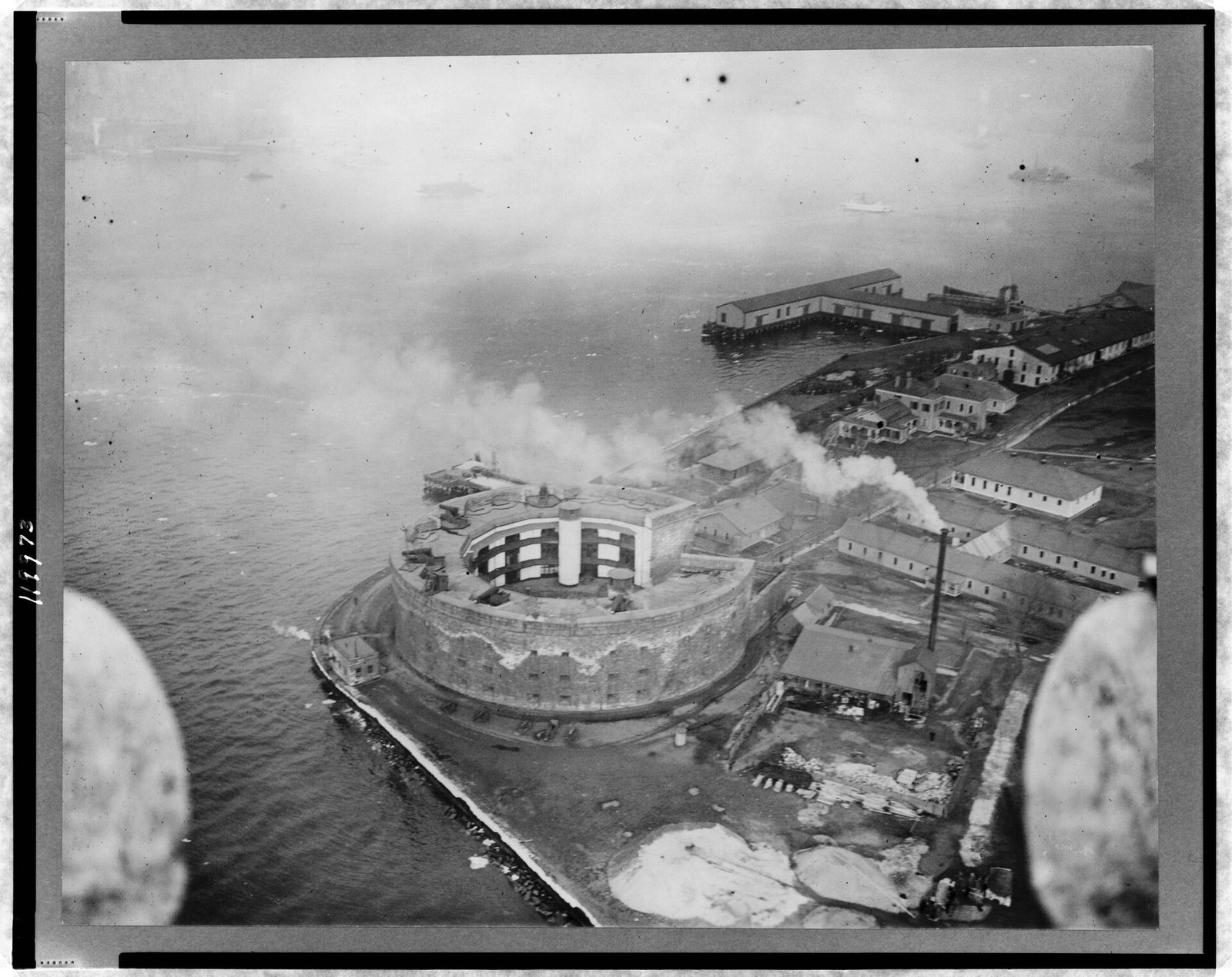
Governors Island is a 172-acre island in New York Harbor, about 800 yards south of Lower Manhattan. In 400 years it has been a Lenape foraging ground, the landing site of New York’s first Dutch settlers, a retreat for royal governors, an Army post, the Coast Guard’s largest base and, since 2005, one of the city’s favorite public parks.
| Size | 172 acres: 69 original acres in the north, 103 acres of fill in the south |
|---|---|
| Location | New York Harbor, about 800 yards from Manhattan and 400 yards from Brooklyn across Buttermilk Channel |
| Borough | Manhattan (ZIP 10004) |
| Who runs it | The Trust for Governors Island (150 acres) and the National Park Service (the 22-acre Governors Island National Monument) |
| Getting there | Ferry from the Battery Maritime Building, 10 South Street, plus NYC Ferry and seasonal Brooklyn ferries (getting here) |
| Open | Daily, year-round since 2021 |
| Visitors | Nearly 1 million a year; close to 10 million since 2005 |
Each era left something you can still see, from Fort Jay’s star-shaped walls to the subway-fill south island and the Hills.
Paggank: the Lenape’s “Nut Island”
Long before it had a governor, the island belonged to the Lenape, who called it Paggank (also spelled Pagganck), meaning “nut island.” The name came from its groves of chestnut, hickory and oak.
Historians believe the Lenape used it seasonally for foraging, hunting and fishing; there is no firm evidence of a permanent village. The Italian explorer Giovanni da Verrazzano, sailing into the harbor in 1524, was probably the first European to see it.
That Lenape story is still told on the island: the American Indian Community House now presents exhibitions and performances in the historic Admiral’s House.
Noten Eylandt: where New York began (1624)
In May 1624 the ship Nieu Nederlandt landed about thirty families, mostly French-speaking Walloons, on the island the Dutch called Noten Eylandt (Nut Island). They were the first settlers of New Netherland, a year before the colony moved across the water to Manhattan.
For that reason, New York’s legislature recognizes Governors Island as the birthplace of New York State. The settlers’ charter also promised that no one would be persecuted for their religion, an early American guarantee of tolerance.
In 1633 Wouter van Twiller, the colony’s fifth director, claimed the island for himself. On June 16, 1637, he drew up a deed with two Lenape leaders, Cacapeteyno and Pewihas, and ran a farm with a windmill until he went home in 1642. The island has stayed in public hands ever since.
Why is it called Governors Island?
Governors Island is named for New York’s British colonial governors. In 1698 the colony reserved the island “for the benefit and accommodation of His Majesty’s Governors,” and the name stuck.
The English had taken New Netherland in 1664 and anglicized Noten Eylandt to Nutten Island. Governors used their private island in their own ways: Lord Cornbury built a mansion there after 1702, and William Cosby kept it as a pheasant-hunting preserve.
The channel to Brooklyn got its name in the same era. It was shallow enough that farm women rowed across it to sell buttermilk in Manhattan, hence Buttermilk Channel. After independence, a 1784 act made the apostrophe-free name “Governors Island” official.
Fortress New York: the Revolution to the Civil War
Governors Island’s position in the middle of the harbor made it a fortress for nearly two centuries.
The American Revolution
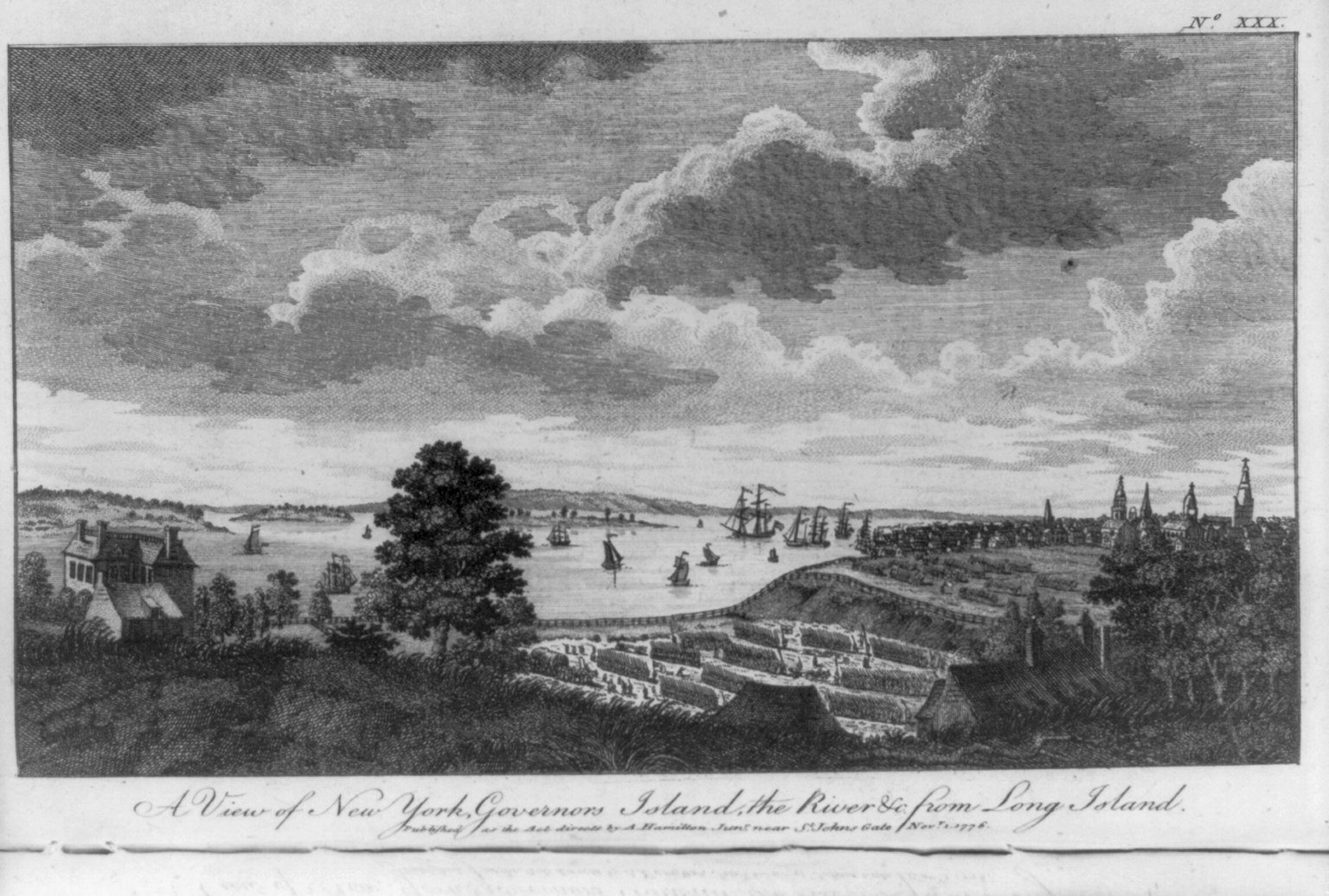
On the night of April 9, 1776, General Israel Putnam landed troops to dig earthworks and mount cannon. On July 12 the island’s guns fired on the British warships HMS Phoenix and HMS Rose as they ran up the Hudson.
After the Battle of Brooklyn that August, the island’s garrison was the last group ferried to Manhattan in Washington’s retreat. On September 6, 1776, the American submersible Turtle tried and failed to sink a British ship near the island, the first documented submarine attack in history. The British then held the island until Evacuation Day in 1783.
Fort Jay and Castle Williams
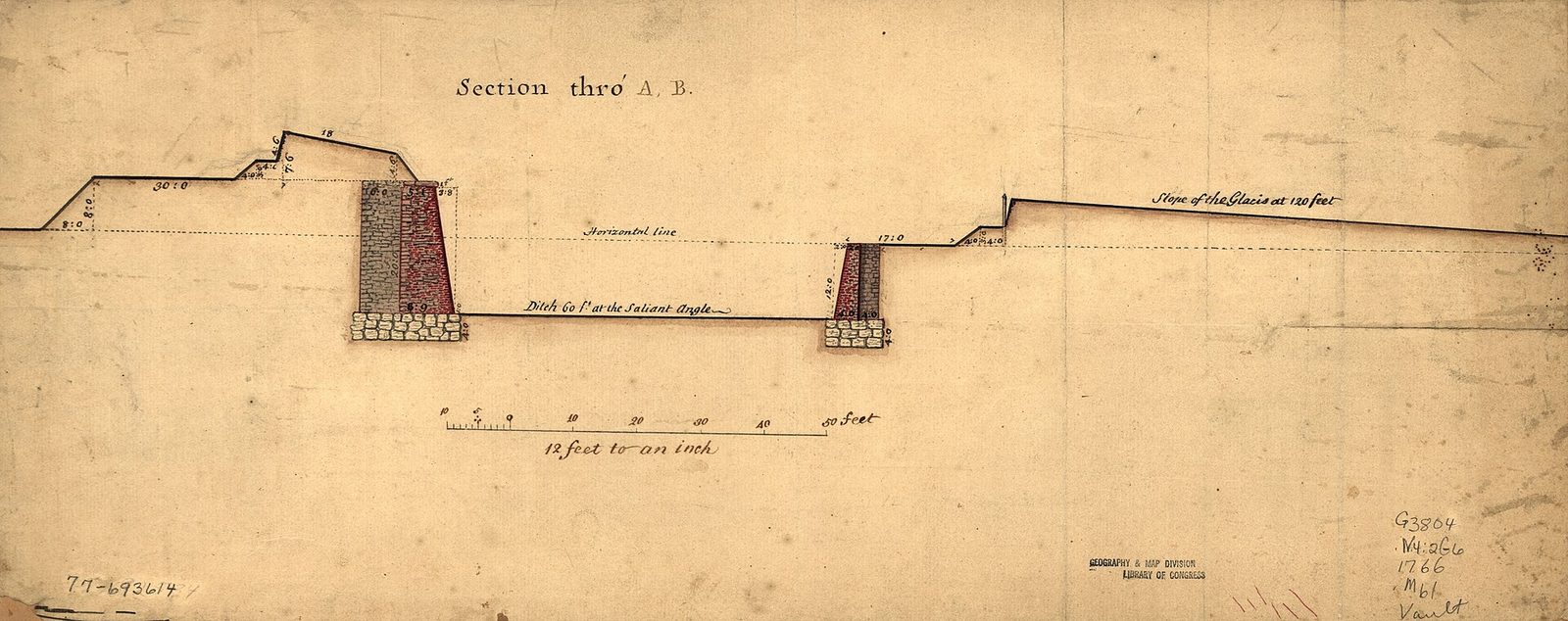
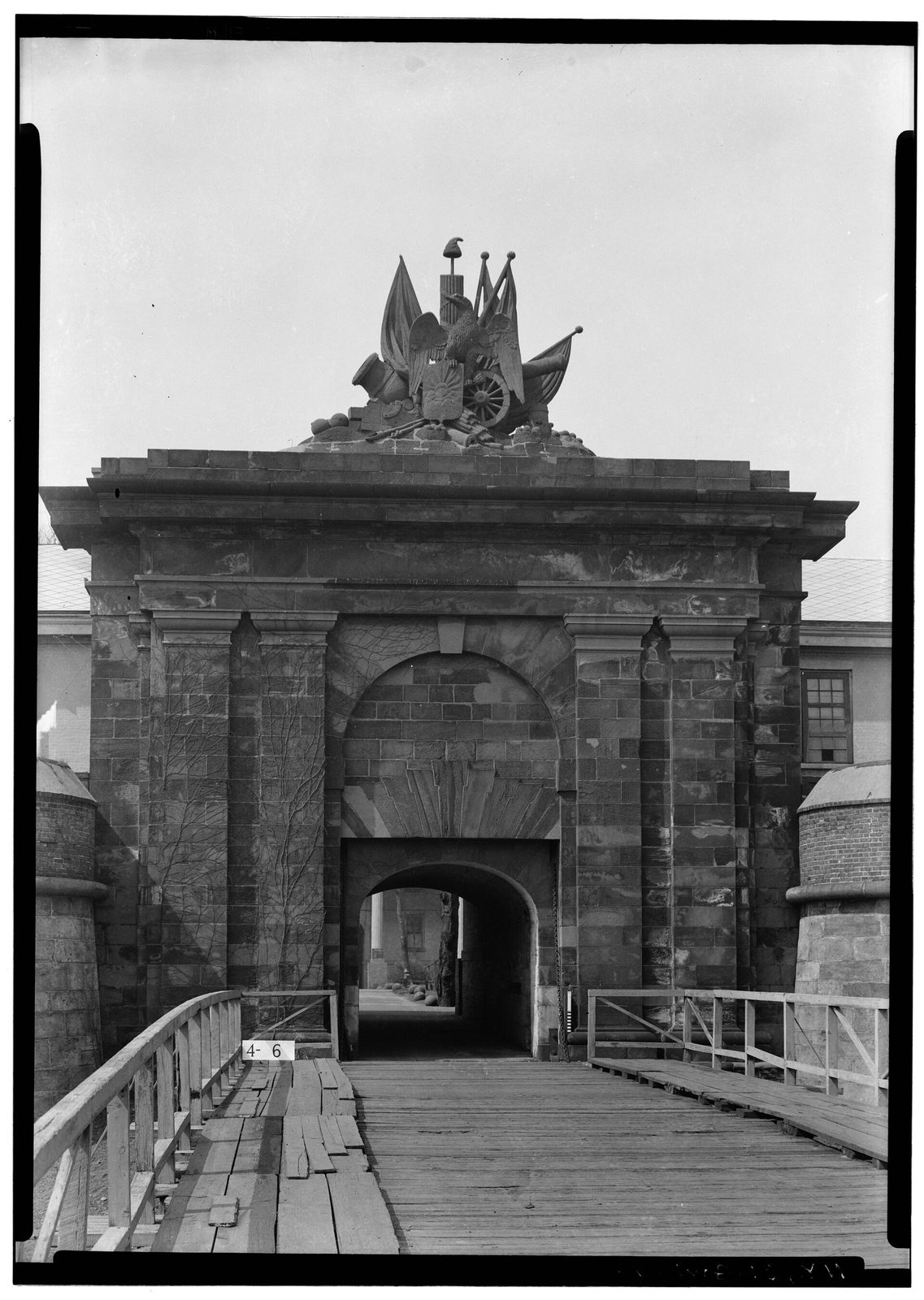
Construction of Fort Jay, named for John Jay, began in 1794 on the old Revolutionary earthworks. It was rebuilt in its current star shape from 1806 to 1809, renamed Fort Columbus, and given back the name Fort Jay in 1904.
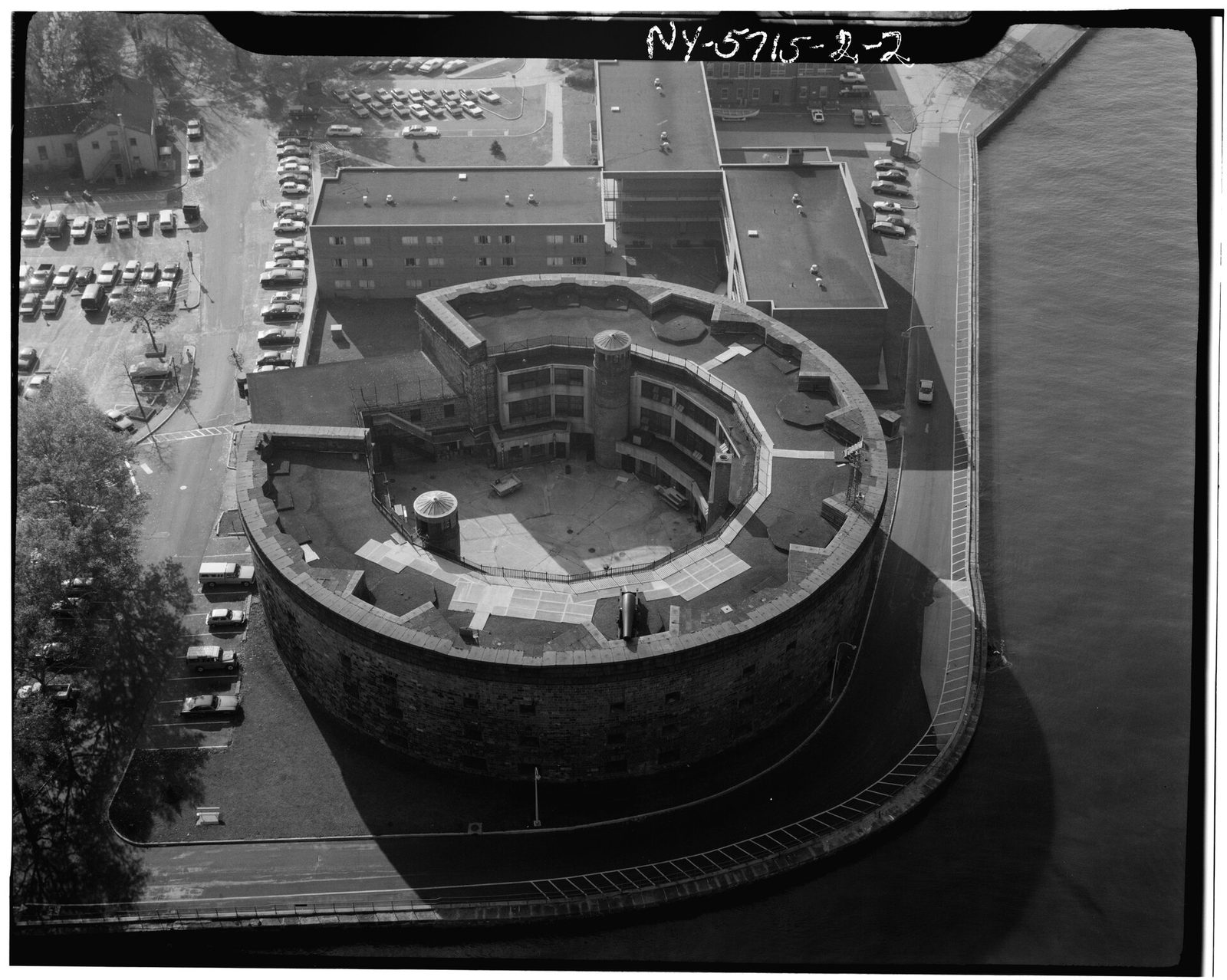
Castle Williams followed between 1807 and 1811. Designed by Colonel Jonathan Williams, the round red-sandstone battery is 210 feet across and was built for 104 cannon; the South Battery went up on the east shore in 1812. Together with Castle Clinton and the forts on Liberty and Ellis islands, they guarded the city through the War of 1812 without ever firing in combat.
The Civil War
During the Civil War the island was a busy muster station for Union recruits. Castle Williams held Confederate prisoners, often more than a thousand at a time, and in 1863 draft rioters tried and failed to seize the island. After the war the castle became a military prison, the East Coast counterpart to Fort Leavenworth and Alcatraz.
The Army’s island: subway landfill, Wilbur Wright and two world wars
By 1878 the island had become a major Army headquarters, and officers moved in with their families. Ulysses S. Grant and Douglas MacArthur both served stints here.
The island that grew from the subway
To make room for more troops, Secretary of War Elihu Root had the island enlarged. Between 1901 and 1912 the Army Corps of Engineers dumped about 4.8 million cubic yards of rock and dirt from the Lexington Avenue subway excavation off the south shore, at a cost of $1.1 million.
The fill added 103 flat acres and brought the island to its current 172. Root also saved Fort Jay and Castle Williams from demolition, which is why both stand today.
Wilbur Wright flies from Governors Island
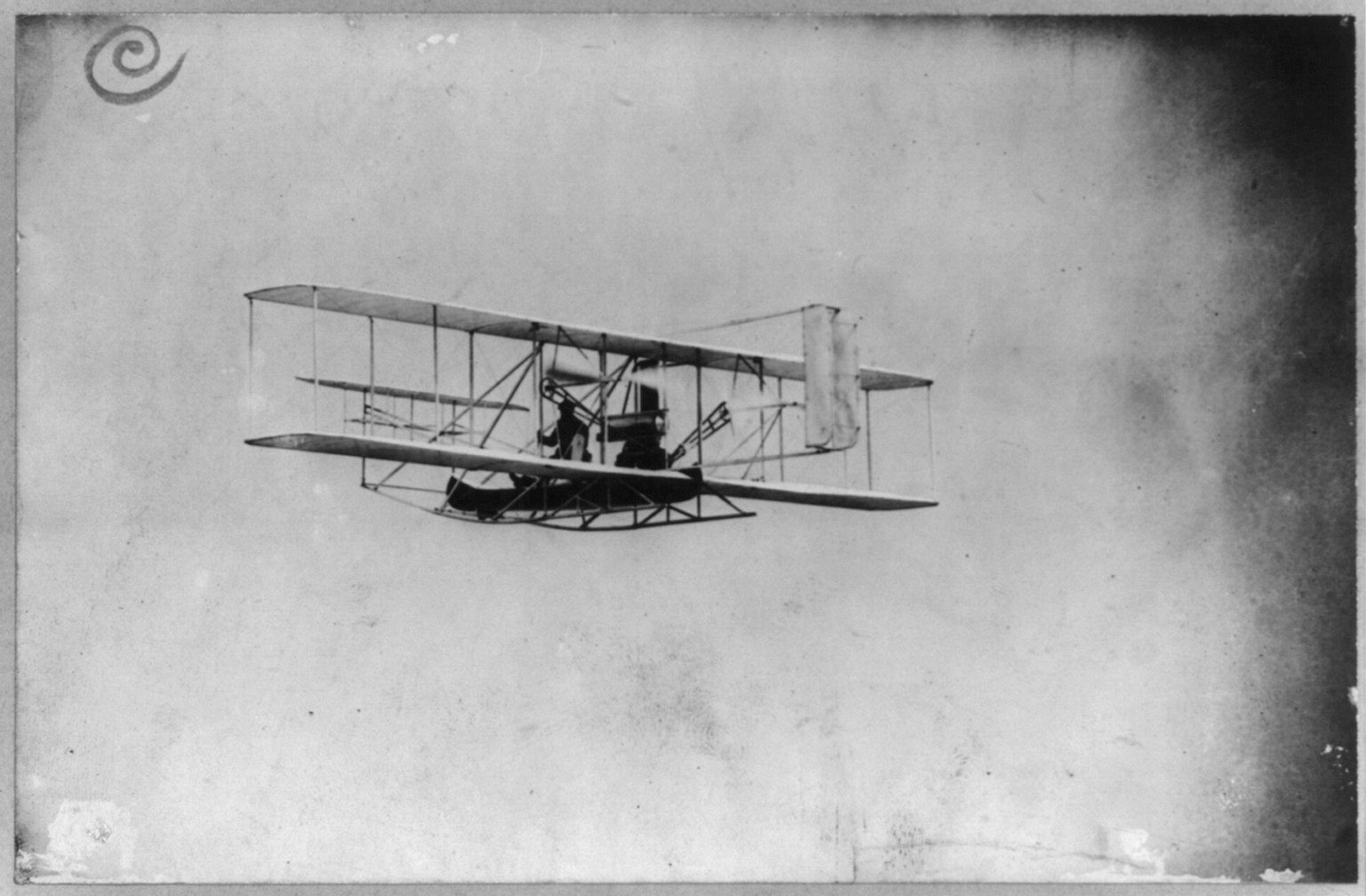
The new, empty south end made a perfect airfield. On September 29, 1909, during the Hudson-Fulton Celebration, Wilbur Wright took off from the island with a red canoe strapped under his Flyer in case he landed in the water. He circled the Statue of Liberty and landed back on the island.
On October 4 he flew up the Hudson to Grant’s Tomb and back, about 20 miles, watched by an estimated million New Yorkers. A propeller-shaped Early Birds monument near Liggett Hall still marks the island’s aviation history.
World wars and the First Army
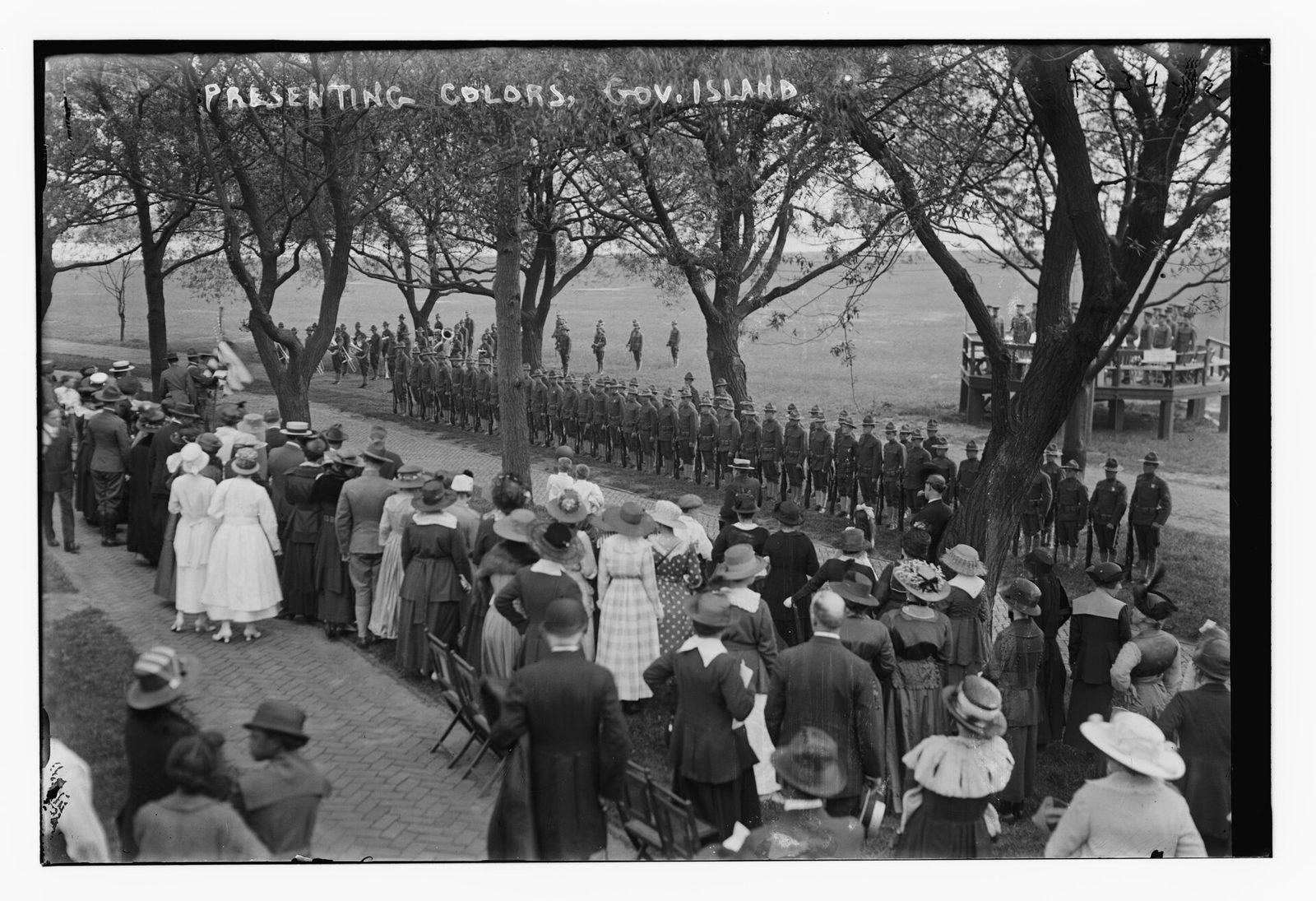
On April 6, 1917, minutes after Congress declared war on Germany, troops from the island seized German ships in the harbor. Warehouses on the new landfill stored $75 million in supplies, linked by the Governors Island Railroad, later nicknamed the world’s shortest railroad.
Between the wars the Army built Liggett Hall, one of the world’s largest barracks, along with a theater, a YMCA and a polo field on the Parade Ground. In 1939 the island became headquarters of the First Army, and by 1942 it was processing 1,500 recruits a day. The Army formally left at the end of 1965.
The Coast Guard years (1966–1996)
In 1966 the island became the Coast Guard’s largest installation and the base for its Atlantic Area command. By 1985 it was a small town of about 4,000 personnel and 1,000 family members, complete with schools, a movie theater, a bowling alley and a Burger King.
It was also the stage for three moments of world history.
Liberty Weekend, 1986
On July 3, 1986, the opening ceremonies of Liberty Weekend were held on Governors Island to celebrate the Statue of Liberty’s restoration. President Reagan pressed a button that sent a laser across the water to relight the torch, and John Williams premiered his “Liberty Fanfare.”
The Reagan–Gorbachev summit, 1988
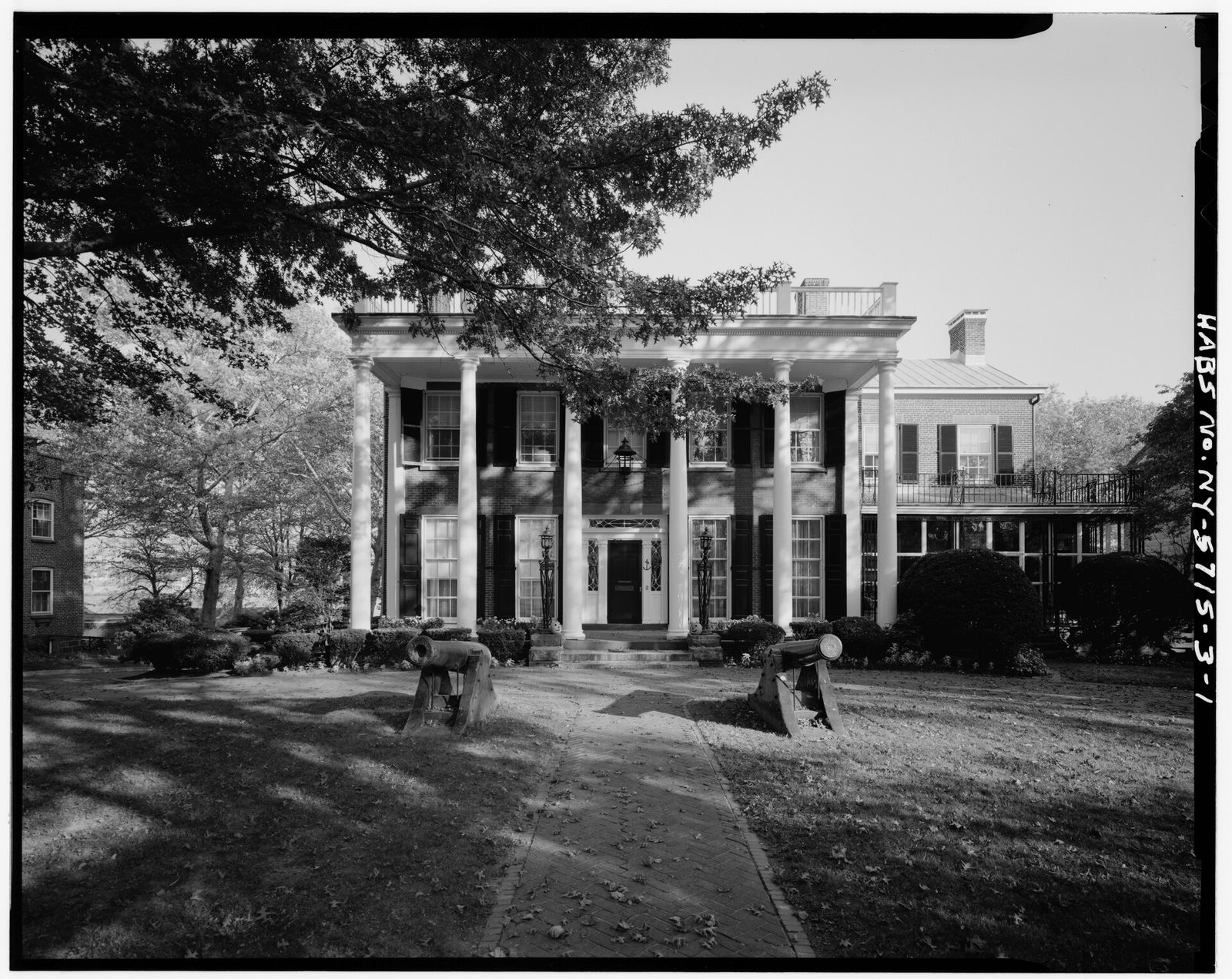
On December 7, 1988, President Reagan and President-elect George H.W. Bush met Soviet leader Mikhail Gorbachev for lunch at the commandant’s residence. It was the last official meeting between Reagan and Gorbachev, held the day Gorbachev announced major unilateral arms cuts at the United Nations.
The Governors Island Agreement, 1993
On July 3, 1993, after UN-hosted talks on the island, Haiti’s exiled president Jean-Bertrand Aristide and coup leader General Raoul Cédras signed the Governors Island Agreement, a plan for Aristide’s return to power.
The Coast Guard announced the base’s closure in 1995, when the island cost $60 million a year to run, and had moved out by 1996. By then a 92-acre portion had been named a National Historic Landmark (1985), and the city had designated the Governors Island Historic District (1996).
Sold for $1: from military base to public park
Governors Island has been sold for a dollar twice. New York State handed it to the federal government in 1800 for $1, and in 2003 Washington sold most of it back to New Yorkers for the same nominal sum.
When the Coast Guard left, ideas for the island ranged from a casino and hotel to a prison, an amusement park and a nightclub district. Instead, President Clinton named 22 acres, including Fort Jay and Castle Williams, the Governors Island National Monument on January 19, 2001.
On January 31, 2003, the other 150 acres went to a city-state agency for a reported $1. The deed bans permanent housing and casinos, and requires large shares of the land to stay parkland or serve educational, civic or cultural uses.
The island opens
The public first came ashore in 2005, when 8,000 people visited. In 2010 the city took full control and created the Trust for Governors Island, and the New York Harbor School moved into a former Army building.
A master plan by the Dutch firm West 8 followed. The first 30 acres of new park opened in 2014, and on July 19, 2016, the Hills opened: four man-made hills built partly from demolished Coast Guard housing. Outlook Hill rises 70 feet for harbor views, and Slide Hill has the city’s longest slide.
Open year-round
The island went year-round in 2021. QC NY, an Italian day spa in restored Army barracks, opened in March 2022 as the island’s first year-round commercial tenant, joined by Collective Retreats’ harbor-side glamping.
Next up is the New York Climate Exchange, a $700 million climate research campus led by Stony Brook University. Visits have grown from 275,000 in 2009 to nearly 1 million a year.
Famous events on Governors Island
Once the island opened to the public, it became one of New York’s great party grounds, with music festivals, polo, art fairs and Prohibition-era dances.
Governors Ball: the festival named after the island
The Governors Ball Music Festival was born here. On June 18, 2011, founders Tom Russell and Jordan Wolowitz staged a one-day, two-stage festival on the island, after scouting it at the previous summer’s Rock the Bells.
Pretty Lights, Empire of the Sun and Girl Talk headlined, with Big Boi, Neon Indian, Mac Miller, Das Racist and a Passion Pit DJ set. Fans packed the ferries, sets never overlapped, and beer pong was officially sanctioned.
Gov Ball outgrew the island after one year but kept the name. It moved to Randall’s Island from 2012 to 2019, Citi Field in 2021 and 2022, and Flushing Meadows-Corona Park from 2023, growing into New York’s biggest music festival.
Polo returns: the Veuve Clicquot Polo Classic
Polo is one of the island’s oldest pastimes. The Army laid out a polo field on the Parade Ground in 1920, and officers’ teams played regularly between the world wars.
On May 31, 2008, the Veuve Clicquot Manhattan Polo Classic brought the sport back after more than 70 years, with Nacho Figueras captaining Black Watch on the South Island fields. Admission and the ferry were free, and picnics were encouraged.
The 2009 match on May 30 starred Prince Harry, playing before Madonna, LL Cool J, Chloë Sevigny and Governor David Paterson. More than 10,000 members of the public turned out in seersucker and summer hats.
On June 5, 2011, Hugh Jackman hosted the fourth Classic, a benefit for Haiti relief attended by Marc Jacobs, Donna Karan and Naomi Watts. Figueras scored four goals in Black Watch’s 6–5 win. In 2012 the event moved to Liberty State Park in New Jersey.
Horses came back in September 2019, when the Longines Global Champions Tour made its New York show-jumping debut on the island.
The Jazz Age Lawn Party
Bandleader Michael Arenella threw the first Jazz Age Lawn Party in 2005, the year the island opened, after a chat with the island’s groundskeeper. Twenty years on, his Dreamland Orchestra still fills Colonels Row Green with flappers, dapper suits and vintage cars each June and August.
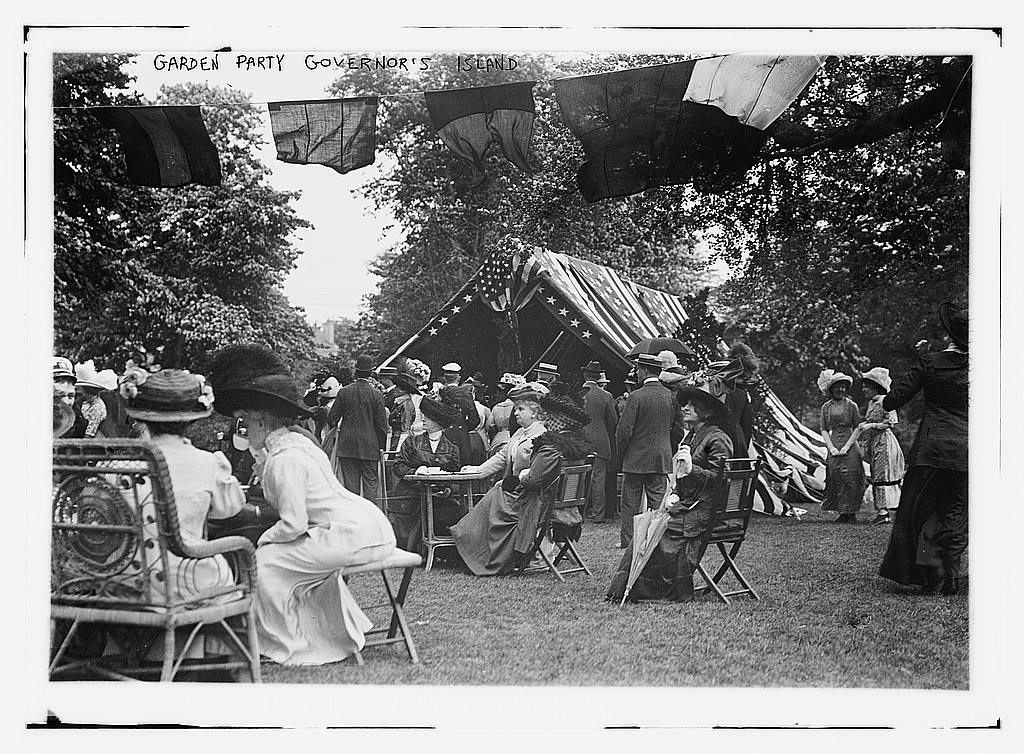
The party revives a real island tradition. In the early 1900s, society hostesses held annual garden parties here to raise money for the Army Relief Society; the June 1929 edition was the largest of them all.
Rock the Bells and the concert summers
On August 28, 2010, the hip-hop festival Rock the Bells took over the island. Wu-Tang Clan performed Enter the Wu-Tang (36 Chambers) in full and Snoop Dogg played Doggystyle.
The headline moment belonged to Lauryn Hill, who brought out Jay-Z, Beyoncé, Mary J. Blige, Alicia Keys and John Legend. The festival returned on September 3, 2011, with Nas, Lauryn Hill and Erykah Badu across four stages.
Other summers brought free shows:
- 2010: Converse’s free “Gone to Governors” series, with Yeasayer, The Morning Benders, Portugal. The Man and a July 4 show by She & Him
- 2011: Bassnectar’s Bass Island and the Dave Matthews Band Caravan, whose Friday show went on before Hurricane Irene cancelled the weekend and sent it to Randall’s Island
- Since 2011: the free Rite of Summer concert series
FIGMENT and the art festivals
FIGMENT, a free festival of interactive art started by Burning Man veterans, debuted on July 8, 2007, drawing about 2,600 people. By 2010 it ran three days and attracted 23,665, and the Village Voice named it the city’s best art festival in 2011.
The Governors Island Art Fair filled Colonels Row, Castle Williams and Fort Jay with artists every year from 2008 to 2023. Today the island also hosts the New York City Poetry Festival, an ice sculpture show and the New York Sail Grand Prix.
Hosting an event on Governors Island today
From Army garden parties to polo matches and Gov Ball, Governors Island has always been where New York comes to celebrate. The Carder carries that tradition forward as a waterfront event venue on the island.
With seating for up to 300 guests, its Ballroom offers over 4,600 square feet of column-free space, complete with hardwood floors, exposed white-washed brick, rafters up to 28 feet, and magnificent city views. The North Terrace, The Carder Suite, Illeta Cafe & Bar, the Ceremony Terrace and the Esplanade, about half an acre of waterfront in all, complete the space.
The food comes from executive chef partner Edi Frauneder, formerly of Edi & the Wolf in the East Village. The Carder hosts weddings, company off-sites, conferences, product launches and parties of every kind, and opens in Spring 2027.
Guests arrive the way Gov Ball fans and polo crowds did: by ferry, a few minutes from Lower Manhattan.
Governors Island history FAQ
Why is it called Governors Island?
In 1698 the British colony of New York reserved the island for the exclusive use of its royal governors. Before that, the Lenape called it Paggank and the Dutch called it Noten Eylandt, both meaning “nut island.”
How big is Governors Island?
Governors Island covers 172 acres. The original island in the north is about 69 acres; the other 103 acres were added between 1901 and 1912 with fill from the Lexington Avenue subway.
Was Governors Ball held on Governors Island?
Yes. The first Governors Ball Music Festival took place on the island on June 18, 2011, and the festival kept the name after moving to Randall’s Island in 2012 and later to Queens.
Did Prince Harry play polo on Governors Island?
Yes. Prince Harry played in the Veuve Clicquot Manhattan Polo Classic on Governors Island on May 30, 2009. The Classic ran on the island from 2008 to 2011, reviving a polo tradition from the Army era.
Who owns Governors Island?
The Trust for Governors Island, a City of New York nonprofit, runs 150 acres. The National Park Service runs the 22-acre Governors Island National Monument, which includes Fort Jay and Castle Williams.
When did Governors Island open to the public?
The island first opened to the public in 2005, two years after the federal government sold it to New York for a reported $1. It has been open year-round since 2021.
How do you get to Governors Island?
Take the ferry from the Battery Maritime Building at 10 South Street in Lower Manhattan, or NYC Ferry. Seasonal ferries also run from Brooklyn. The crossing from Manhattan takes about six minutes.
Can you host a wedding or corporate event on Governors Island?
Yes. The Carder is a waterfront event venue on Governors Island for weddings, company off-sites, conferences, product launches and private parties.
Sources
- Governors Island (Wikipedia)
- A Brief History of Governors Island (National Park Service)
- The Role of Governors Island in the American Revolution (NPS)
- Governors Island timeline (Creative Time)
- Fort Jay (Wikipedia)
- Proclamation 7647: Governors Island National Monument (White House archive)
- Wilbur Wright and the Statue of Liberty (Smithsonian)
- Wilbur Wright flies from Governors Island to Grant’s Tomb (CultureNOW)
- Liberty Weekend (Wikipedia)
- Reagan, Gorbachev and Bush at Governors Island (National Security Archive)
- Governors Island Agreement, 1993 (Uppsala Conflict Data Program)
- The Hills open to the public (NYC press release, 2016)
- QC NY spa opens (6sqft)
- Governors Island 2025 Year in Review (Trust for Governors Island)
- Governors Ball Music Festival (Wikipedia)
- Oral history of the first Governors Ball (Consequence)
- Governors Ball 2011 in photos (Stereogum)
- How Governors Ball was built (Inc.)
- Polo returns to Governors Island, 2009 season (Trust blog)
- Governors Island Polo Team (Trust blog)
- Prince Harry at the Manhattan Polo Classic (BizBash)
- Hugh Jackman hosts the 2011 Polo Classic (DNAinfo)
- Jazz Age Lawn Party (Wikipedia)
- Governors Island lawn parties, 1900–2025 (Fitzpatrick)
- Rock the Bells at Governors Island, 2010 (BrooklynVegan)
- Rock the Bells 2011 (MTV News)
- Gone to Governors, June 2010 (BrooklynVegan)
- Dave Matthews Band Caravan (Wikipedia)
- FIGMENT 2010 recap (Laughing Squid)
- Governors Island history (Time Out New York)